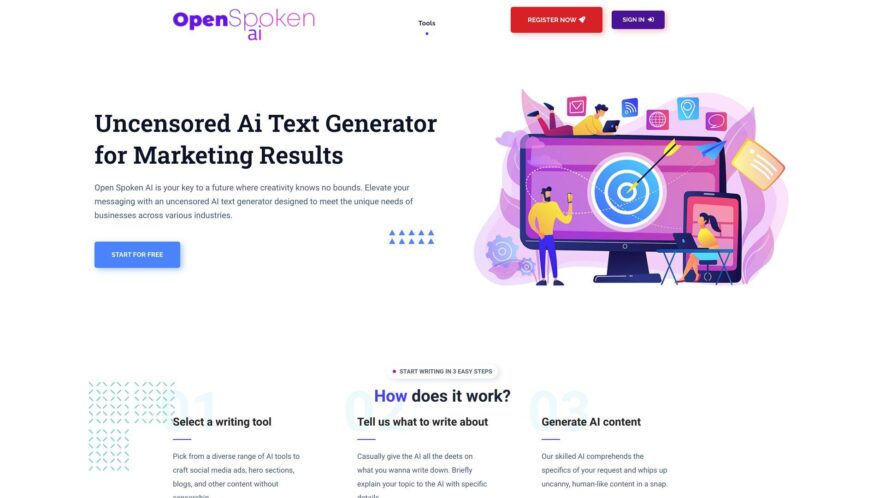
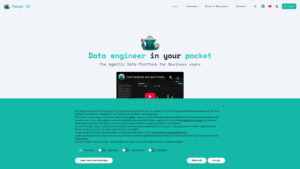
OpenSpoken AI is a conversational AI platform that enables businesses to build, train, and deploy custom voice assistants and conversational interfaces. It provides a suite of tools and APIs for speech recognition, natural language processing, and dialogue management. The platform supports multiple languages and can be...
OpenSpoken AI is a conversational AI platform that enables businesses to build, train, and deploy custom voice assistants and conversational interfaces. It provides a suite of tools and APIs for speech recognition, natural language processing, and dialogue management. The platform supports multiple languages and can be integrated with various devices and platforms. OpenSpoken AI aims to help companies improve customer experiences, increase efficiency, and reduce costs through conversational AI solutions.
Automated speech recognition technology for accurate voice-to-text transcriptions.
Real-time processing for instant speech recognition results.
Customizable vocabulary for industry-specific terminology and jargon.
Advanced noise reduction and audio enhancement capabilities.
Support for multiple languages and dialects worldwide.
Integration with popular platforms and software applications.
Advanced analytics and insights for speech pattern analysis.
Scalable infrastructure for handling large volumes of audio data.
You Got Questions,We Got Answers
What is OpenSpoken AI's primary goal?
To enable conversational AI systems to understand and respond empathetically to users' emotions and personal concerns in various languages and cultures.
How does OpenSpoken AI's technology work?
By leveraging advanced natural language processing, machine learning, and emotional intelligence to analyze and generate human-like conversational interactions that are culturally sensitive and empathetic.
What kind of applications does OpenSpoken AI support?
A wide range of conversational AI applications, including chatbots, virtual assistants, and voice-powered interfaces for various industries such as healthcare, education, and customer service.
Can OpenSpoken AI handle multiple languages?
Yes, OpenSpoken AI's technology is designed to support multiple languages and cultures, enabling conversational AI systems to interact with users from diverse linguistic and cultural backgrounds.
Is OpenSpoken AI's technology proprietary?
Yes, OpenSpoken AI's technology is proprietary and protected by patents, trademarks, and copyrights, ensuring that our innovative solutions remain unique and exclusive to our customers and partners.
How does OpenSpoken AI ensure data privacy?
By implementing robust data protection measures, adhering to industry standards, and complying with data privacy regulations, such as GDPR and HIPAA, to safeguard users' sensitive information.
Use cases
Healthcare
Clinicians use OpenSpoken AI to transcribe patient consultations, streamlining clinical documentation and freeing up time for more personalized interactions, improving patient outcomes and enhancing the overall quality of care
Finance
Financial analysts leverage OpenSpoken AI to transcribe and analyze earnings calls, conferences, and investor meetings, uncovering valuable insights that inform investment decisions and drive business growth
Manufacturing
Quality control teams utilize OpenSpoken AI to transcribe and analyze equipment malfunctions, identifying root causes, and implementing process improvements that increase production efficiency and reduce costs
Retail
Customer service representatives use OpenSpoken AI to transcribe and analyze customer interactions, identifying trends and areas for improvement, and enhancing the overall customer experience
Marketing
Marketers employ OpenSpoken AI to transcribe and analyze focus groups, customer feedback, and market research, informing campaign strategies and driving more effective brand messaging
Education
Educators use OpenSpoken AI to transcribe lectures, creating accessible learning materials for students with disabilities, and improving overall student engagement and academic performance
Traffic and Engagement
Feb 2026 - Apr 2026
World wide
Monthly visitors (April)
88.7k
Page/Visit
3.5
Visit Duration
53s
Bounce Rate
0.4%
Pricing
Freemium
$29
Open Spoken Embeds
Copied!
Let your community know you're live on Skillcurb! Just drop a badge on your site’s homepage with just a few clicks. Showcasing the badge helps increase your visibility and connects you with users actively exploring top AI tools.