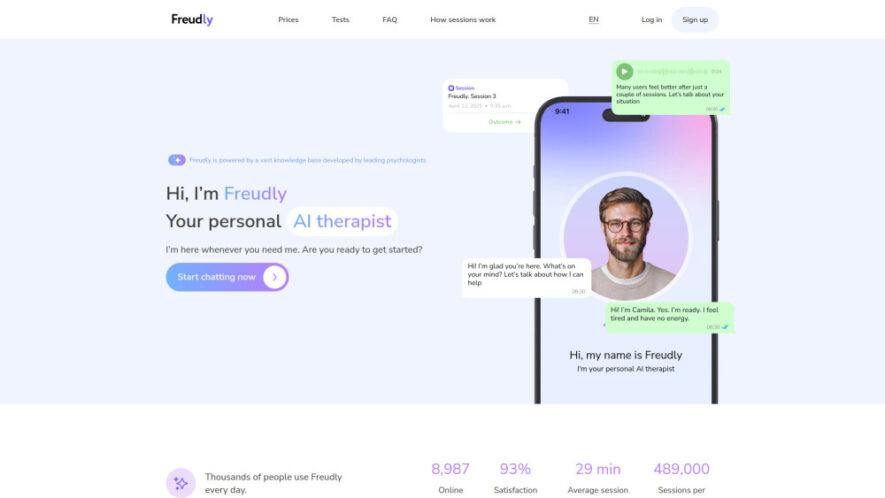
Freudly is an AI-powered mental health assistant designed to provide accessible emotional support through text and voice conversations. It helps users explore feelings, recognize unhelpful thinking patterns, complete psychological assessments, journal experiences, and track emotional well-being. Freudly offers personalized CBT-based guidance and practical recommendations while maintaining...
Freudly is an AI-powered mental health assistant designed to provide accessible emotional support through text and voice conversations. It helps users explore feelings, recognize unhelpful thinking patterns, complete psychological assessments, journal experiences, and track emotional well-being. Freudly offers personalized CBT-based guidance and practical recommendations while maintaining anonymous conversations. It is intended for consultation and self-help purposes only and does not replace professional therapy or medical care.
Provides AI-powered therapy conversations through convenient text and voice messaging.
Creates personalized CBT-based guidance tailored to individual emotional concerns and goals.
Offers psychological assessments and self-awareness tests for deeper emotional understanding.
Tracks mood patterns through journaling tools and emotional well-being progress.
Builds psychological profiles using conversation history and self-reported emotional patterns.
Supports anonymous conversations with encryption designed to protect user privacy.
Remains available around the clock for accessible emotional support and guidance.
Explains psychological concepts clearly and provides practical self-help recommendations for users.
You Got Questions,We Got Answers
What is Freudly AI and how does it work?
Freudly is an AI-powered mental health assistant that uses conversational technology and evidence-based psychological approaches to provide supportive guidance. Users can discuss concerns, explore emotions, complete assessments, journal experiences, and receive practical self-help recommendations.
Can Freudly provide personalized CBT-based emotional guidance?
Yes, Freudly can provide personalized CBT-based guidance based on information users share during conversations. It helps identify unhelpful thought patterns, explore emotional responses, and suggest practical strategies, while remaining a consultation and self-help tool.
Does Freudly support both text and voice conversations?
Yes, Freudly supports both text and voice interactions, allowing users to communicate in a conversational format. Users can describe concerns naturally, answer questions, explore emotions, and receive guidance through whichever communication method feels more convenient.
What kinds of emotional concerns can Freudly help with?
Freudly can support users exploring anxiety, stress, depression, burnout, self-esteem concerns, relationship difficulties, and emotional awareness. It provides self-help techniques and reflective guidance, but users should seek qualified professional support for serious or persistent concerns.
Does Freudly keep conversations anonymous and protected securely?
Freudly states that conversations are anonymous and protected using secure encryption protocols. According to its description, the service minimizes personal information collection and says conversations are not transferred to third parties or accessed by its team.
Can users track moods and maintain emotional journals?
Yes, Freudly includes emotional well-being tracking features such as mood charts and journaling. These tools can help users record experiences, notice recurring emotional patterns, reflect on changes, and review personal progress over time.
Is Freudly a replacement for professional mental health treatment?
No, Freudly is not a replacement for professional therapy, diagnosis, or medical treatment. It is designed for consultation and self-help purposes, so users with significant, worsening, or persistent concerns should consider speaking with a qualified mental health professional.
How does Freudly differ from general-purpose AI assistants?
Freudly is designed specifically around mental health support and evidence-based psychotherapy approaches, rather than serving as a general-purpose assistant. Its specialized features include CBT-based guidance, psychological assessments, emotional tracking, journaling, and mental health-focused conversations.
Use cases
Anxiety
Explore anxious feelings, identify thought patterns, and practice practical CBT-based strategies for managing everyday anxiety when appropriate.
Stress
Understand stress triggers, organize difficult emotions, and develop healthier coping approaches for demanding situations when appropriate.
Depression
Recognize difficult emotional patterns and receive supportive self-help guidance for improving daily emotional awareness when appropriate.
Self-Esteem
Build greater self-awareness, challenge negative thoughts, and develop healthier perspectives about personal strengths when appropriate.
Relationships
Explore relationship concerns, understand emotional reactions, and consider constructive ways to communicate and respond when appropriate.
Awareness
Discover emotional patterns, reflect on experiences, and develop a clearer understanding of personal feelings when appropriate.
Thinking
Identify unhelpful thinking habits and practice more balanced, realistic ways of interpreting challenging situations when appropriate.
Burnout
Recognize signs of emotional exhaustion, reflect on contributing pressures, and explore healthier coping strategies when appropriate.
Traffic and Engagement
Jun 2026 - Aug 2026
World wide
Monthly visitors (August)
550.5k
Page/Visit
3.3
Visit Duration
1m 41s
Bounce Rate
40.10%
Pricing
Freemium
$18.99
Freudly — AI Therapist Embeds
Copied!
Let your community know you're live on Skillcurb! Just drop a badge on your site’s homepage with just a few clicks. Showcasing the badge helps increase your visibility and connects you with users actively exploring top AI tools.