Login Sign Up

Python Basics

University of Michigan via Coursera

Coursera based on 18,023 ratings

Share

0

Overview

This course introduces the basics of Python 3, including conditional execution and iteration as control structures, and strings and lists as data structures. You'll program an on-screen Turtle to draw pretty pictures. You'll also learn to draw reference diagrams as a way to reason about program executions, which will to build up your debugging skills. The course has no prerequisites. It will cover Chapters 1-9 of the textbook "Fundamentals of Python Programming," which is the accompanying text (optional and free)...

Syllabus

  • Introduction and The Basics of Programming in Python
    • In week one you will be introduced to programming in python through lectures and the Runestone textbook - an interactive online textbook built for this course. By the end of the module, you will have run your first python program, and learned how to draw images by writing a program.
  • Sequences and Iteration
    • In week two you will use the lectures and the Runestone textbook to understand the basics of a few python data types - lists, strings, tuples - as well as a control structure - for loops. By the end of this week, you will be able to write more complex programs that create drawings by incorporating for loops. Finally, we will present the basics of an accumulation pattern to you, which will be expanded on in each week for the rest of the course.
  • Booleans and Conditionals
    • In week three you will learn a new python data type - the boolean - as well as another control structure - conditional execution. Through the use of video lectures and the Runestone textbook, you will learn what Binary, Unary, Nested, and Chained Conditionals are, as well as how to incorporate conditionals within an accumulation pattern.
  • Sequence Mutation and Accumulation Patterns
    • In week four we will present deeper knowledge on using lists, strings, and python objects in general. We will also cover how to use the accumulation pattern with lists and with strings. The final assignment will test your knowledge and skills through application, much like previous assessments and assignments did, though with a more difficult set of tasks now that you have learned the basics.
Python Basics
Go to Class

University of Michigan via Coursera

2 hours 50 minutes

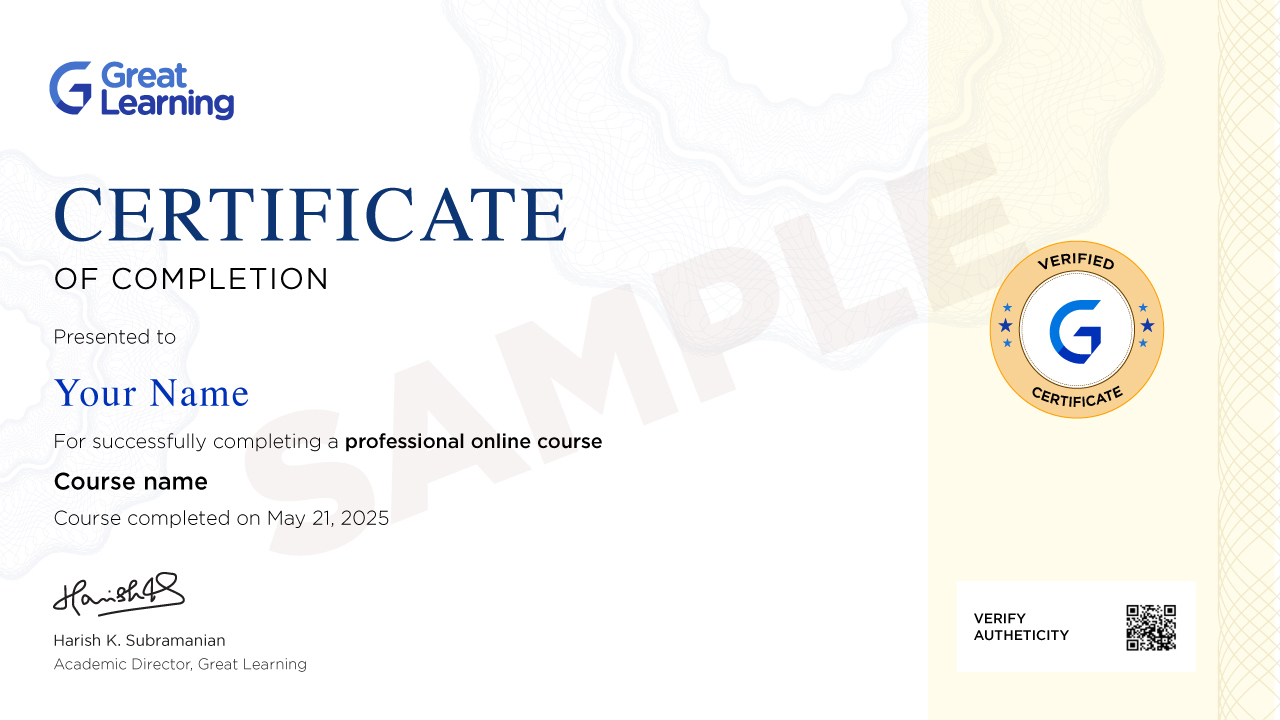
Paid Certificate Available

English

On-Demand

Beginner

Instructor

Paul Resnick

Reviews

No reviews yet. Be the first to review!